Held as part of World Food Day, the event brought together learners, community representatives, University staff and development partners to explore sustainable responses to food insecurity.
Under the theme “Hunger of the Stomach, Hunger of the Mind,” the dialogue examined how hunger affects not only access to food but also dignity, psychological and spiritual well-being, education and social participation.
Facilitated by Oyama Soga of the University’s Engagement Office, the programme explored five themes, from the realities of hunger to indigenous knowledge, local food economies and collective action.
The reality of hunger – hunger of the stomach

Principal from Daniels Primary, LL Mani, Nwabisa Somnandi from the Zwide Development Forum (ZDF) and Sinovuyo Mafilika, founder of the Khalimani Reading Club.
The first session explored food insecurity among learners and communities, particularly in Zwide and New Brighton. Learners from Zamukukhanyo Primary School, Daniels and Charles Duna primary schools shared how hunger affects school attendance, concentration and classroom participation.
The participants highlighted the challenges faced by children without birth certificates or identification documents. As school nutrition provision is linked to learner registration and school records, incomplete documentation can create barriers to accessing food assistance, leaving some vulnerable children without adequate support.
Community representatives also discussed the broader social consequences of hunger, including the risks of crime and substance abuse among young people facing economic hardship. These experiences underscored the need for coordinated community and institutional responses that address both immediate food needs and the underlying causes of food insecurity.
The session called for practical measures to remove barriers to food access and ensure that community experiences inform sustainable interventions.
Hunger of the mind – psychological, social and spiritual dimensions
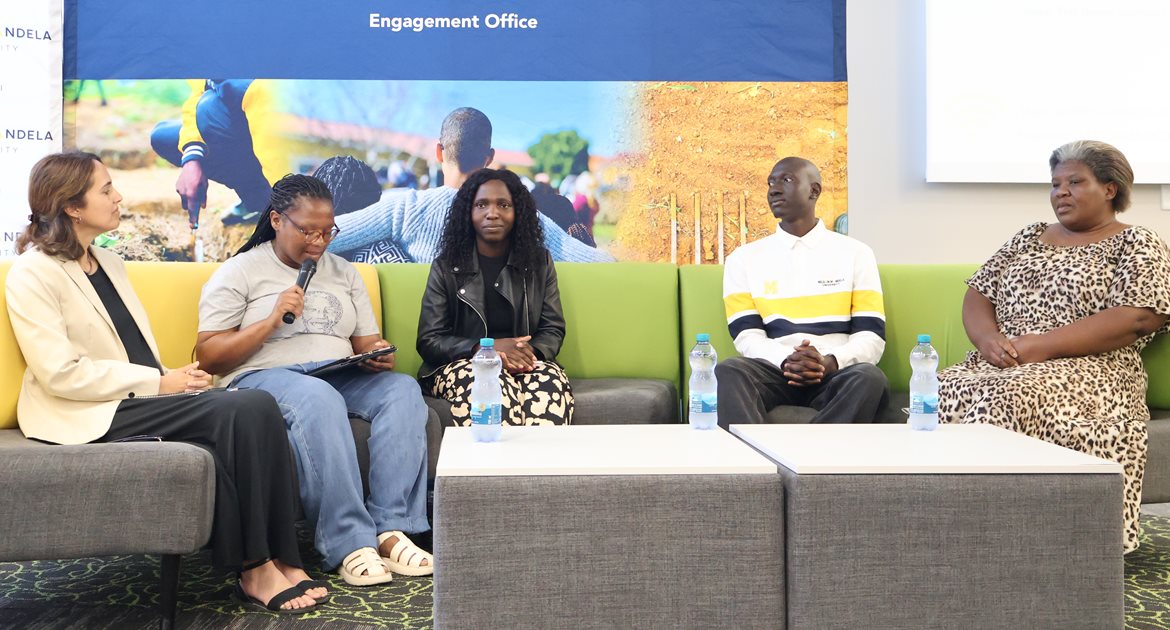
From left, Dr Natalie Mansvelt, Zinzi Malakane, Nomthandazo Pukwana, Mukundi Mukundi and Nomathamsanqa from New Brighton
Contributions from the University staff and representatives associated with Homes of Hope highlighted the often-hidden effects of hunger on University students. Financial pressures can force students to choose between food and clothing, while fear of social judgement may prevent them from seeking assistance.
The participants discussed how food insecurity affects students’ dignity, confidence, sense of belonging and academic performance. The session called for stronger student nutrition advocacy and supportive environments where students can access assistance without stigma.
Knowledge, Indigenous Knowledge and agroecology
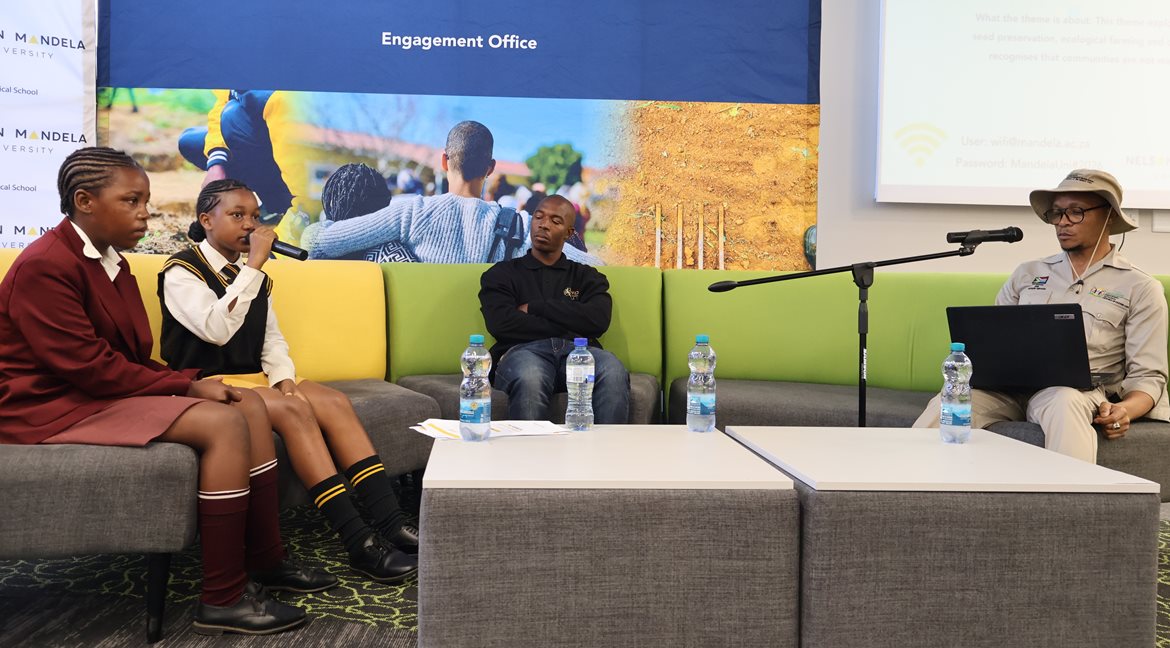
Learners together with Vusumzi Phezisa and Bongani Gocina
Learners from eMzomncane and Pendla primary schools joined Vusumzi Phezisa of the Zwide Development Forum and Bongani Gocina from the Department of Agriculture in Gqeberha to explore sustainable food production.
Gocina highlighted agriculture’s role in addressing food insecurity, and a community representative shared indigenous knowledge about plants and local planting practices.
The discussion recognised the value of community knowledge and the importance of collaboration among schools, agricultural practitioners and institutional partners in strengthening local food production and food sovereignty.
The third session explored how agriculture, indigenous knowledge and locally grounded practices can contribute to sustainable food systems.
From food security to local food economies
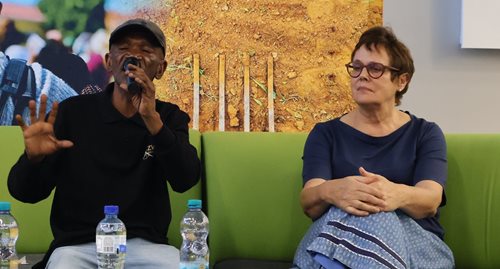 Mawethu Matyu and Irna Senekal
This session explored how communities can move beyond meeting immediate food needs towards sustainable local food economies.
Contributors included learners from Sakhisizwe Secondary School and Mnqophiso Primary School, Mawethu Matyu of the Zwide Development Forum, and Irna Senekal, Director of Mandela University’s Centre for Integrated Post-School Education and Training.
The discussions focused on how community knowledge, institutional resources and local initiatives can strengthen food systems, encourage participation and create sustainable opportunities for community development.
Convergence – from dialogue to collective action
 Dr Bruce Damons
Led by Dr Bruce Damons, Director of the University’s Engagement Office, the final session focused on translating dialogue into practical action.
Dr Damons proposed that participating organisations meet before the end of 2026 to identify shared priorities, strengthen partnerships and develop coordinated responses to food insecurity.
The proposed meeting aims to establish a collaborative way forward involving the University, community organisations and development partners.
Conclusion and way forward
The dialogue highlighted the far-reaching effects of hunger on education, dignity, well-being and community development.
Learners and community representatives identified key challenges, including documentation barriers affecting children, food insecurity among University students and the need to strengthen local food production.
The discussions on indigenous knowledge, agroecology and local food economies reinforced the importance of community-led, sustainable solutions.
The proposed stakeholder meeting before the end of 2026 will provide an opportunity to turn these insights into collaborative initiatives that address food insecurity and support lasting change.