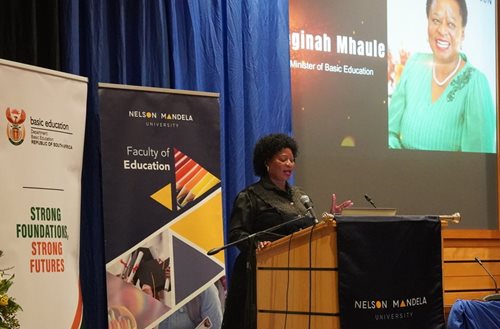
 Deputy Minister Dr Makgabo Mhaule
This was the message from Deputy Minister of Basic Education Dr Makgabo Reginah Mhaule, one of the keynote speakers at Nelson Mandela University’s 2026 Annual Teachers Symposium.
Hosted by the Faculty of Education, the symposium explored the theme “Reconfiguring Teacher Education for a Technologically Enriched, Socially Just, and Transformative Future”, bringing together education leaders, academics and school principals.
Dr Mhaule identified shortages in critical teaching areas, including Foundation Phase education, African languages, mathematics, physical sciences, technology, inclusive education and technical and vocational subjects.
She emphasised the importance of foundational literacy and numeracy, mother-tongue education and the recognition of African languages. As schools adapt to technological change, she said, “teachers must develop digital competencies while ensuring technology does not deepen existing inequalities.”
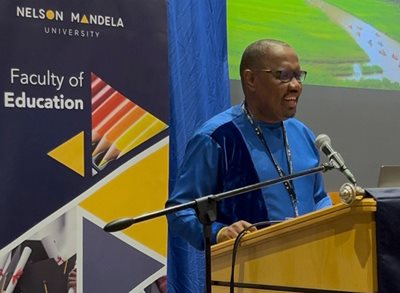 Professor Emmanuel Mgqwashu
The second keynote speaker, Professor Emmanuel Mgqwashu, Dean and Head of the School of Education at the University of KwaZulu-Natal, challenged educators to rethink how they prepare young people for the future.
“We do not have a singular future in our lecture halls. We have futures,” he said, urging teacher educators to recognise that learners come from different social, cultural and economic backgrounds that shape their aspirations and understanding of success.
Addressing artificial intelligence (AI), Prof Mgqwashu cautioned that technology can generate convincing information without guaranteeing accuracy.
He stressed the need to equip educators and students who can question, evaluate and use AI responsibly. “We are not against AI. We are against intellectual illiteracy,” he said.
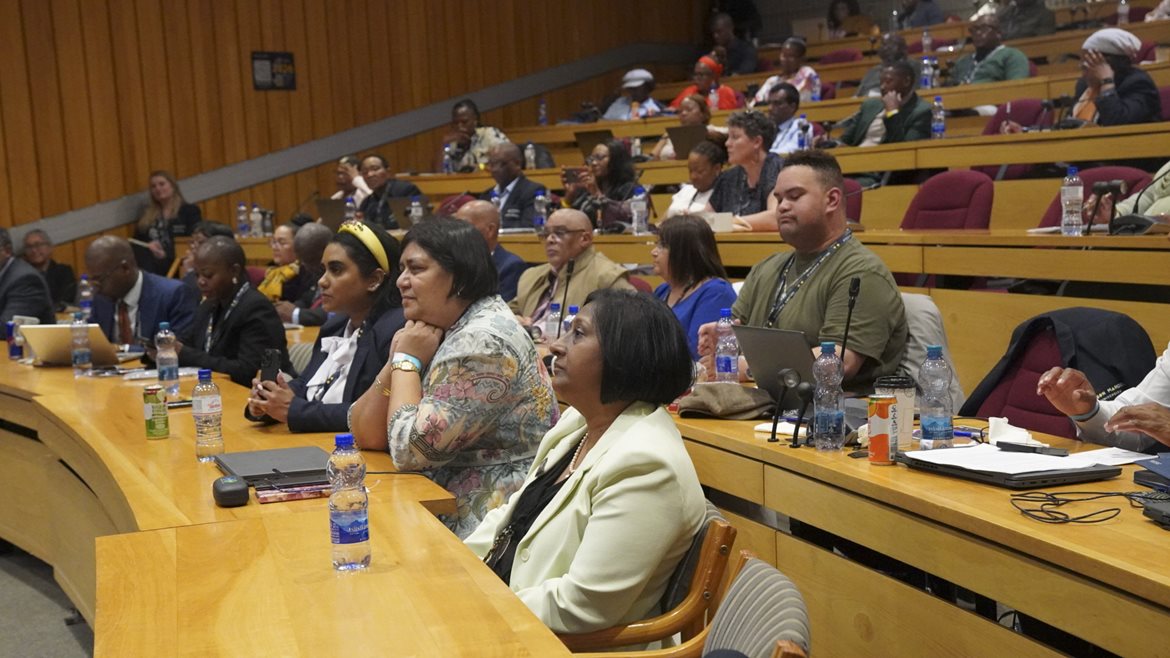
A highlight of the symposium was a round-table discussion involving education deans from Mandela University, Rhodes, Fort Hare and Walter Sisulu universities, alongside principals from Swartkops, Parsons Hill and BJ Mnyanda primary schools and Uitenhage and Paterson high schools.
Moderated by Prof Mathabo Khau of Mandela University’s Faculty of Education, the discussion explored how universities can better prepare student teachers for the demands of the profession.
Dr Kavish Jawar, Deputy Dean of the Faculty of Education at Rhodes University, reflected on the gap between theoretical preparation and the encountering learners in real classrooms.
“When I first walked into the classroom as a newly qualified teacher, I didn't face these abstract concepts of transformation, diversity (and) things like that. What I faced were human beings, young human beings, children of this country,” he said.
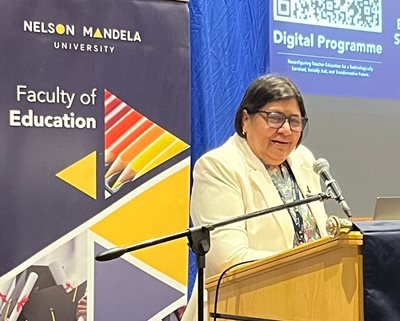 Professor Heloise Sathorar
, Executive Dean of Mandela University’s Faculty of Education, emphasised the need for purposeful technology integration.
“We have to teach our students to use technology to serve education and not the other way around.”
The panellists highlighted inclusive teaching, humanising pedagogy, practical learning and responsible digital innovation as essential components of effective teacher development.
School principals shared their experiences of mentoring student teachers and raised concerns about graduates’ preparedness for classroom management, administrative duties and the social challenges learners face.
Paterson High School principal Rose De Doncker stressed that teachers must understand learners beyond their academic performance. “You are not coming in to teach curriculum only, you must understand the learner,” she said.
Mark Williams, principal of Uitenhage High School, called for student teachers to receive training in “psychosocial support and trauma-informed teaching”. He noted that learners may arrive at school affected by hunger, family conflict, abuse and exposure to drugs.
Principals also advocated for more extensive teaching practice, structured mentorship and stronger partnerships between universities and schools.
They emphasised the importance of involving student teachers in the broader life of schools, including staff meetings, extracurricular activities and administrative responsibilities, to give them a realistic understanding of the profession before they take up permanent posts.
The symposium also recognised partner schools in Nelson Mandela Bay that have hosted Mandela University student teachers for 10 consecutive years. During an awards presentation, these schools received certificates acknowledging their longstanding contribution to teacher development and the practical training of future educators.
A clear message emerged from the symposium: transforming teacher education requires more than universities working in isolation.
Strong partnerships between higher education institutions, schools, government and communities are essential to producing graduates who are academically capable, professionally prepared and responsive to the social realities of South African learners.