“Place, Practice, and Knowledge: Indigenous Knowledge Systems in Arts and Architecture”, was the theme of the conference bringing together scholars, practitioners, creatives and Indigenous representatives.
The conference was a collaboration between the Faculty of Engineering, the Built Environment and Technology (EBET), the School of Architecture, the Faculty of Humanities, the School of Visual and Performing Arts, and the Indigenous Knowledge Systems of the Built Environment Unit (IKSBEU).
A total of 22 contributions featured from scholars across South Africa, alongside international presenters from Australia, England and Spain. Presentations explored craft and knowledge transmission, community and spatial practices, Indigenous architectures, climate resilience and adaptation, pedagogy, memory and international perspectives on Indigenous knowledge.
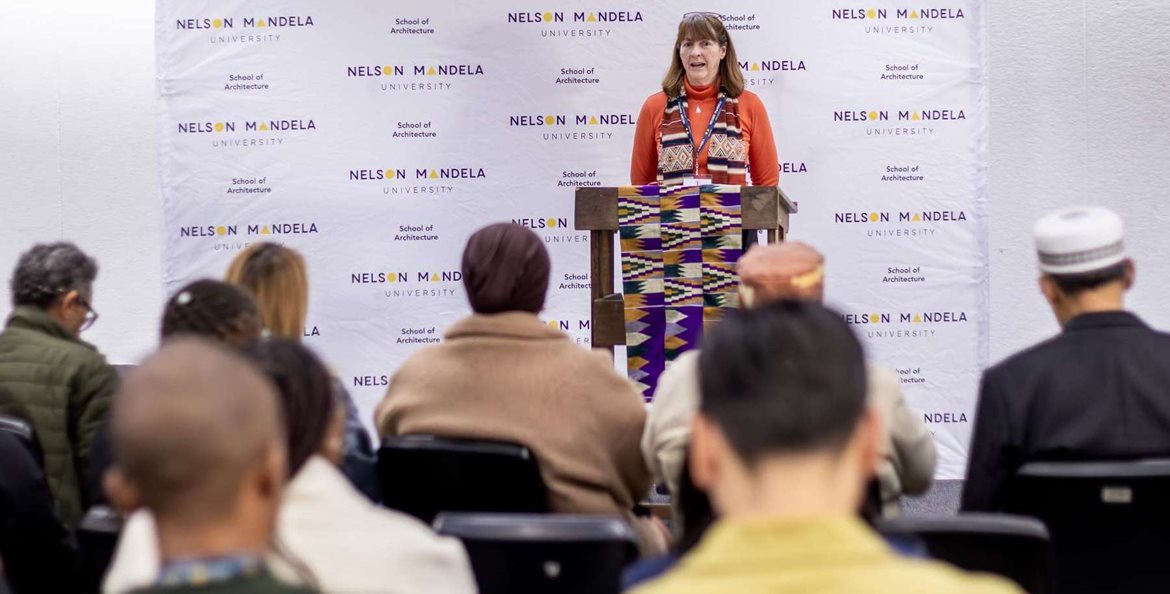
Dr Yolanda van der Vyver opening the conference
The conference was opened by Prof Sudesh Rathilal, Executive Dean of EBET, followed by Dr Yolanda van der Vyver, Editor of SAJAH, and Prof Magda Minguzzi, Team Leader of IKSBEU.
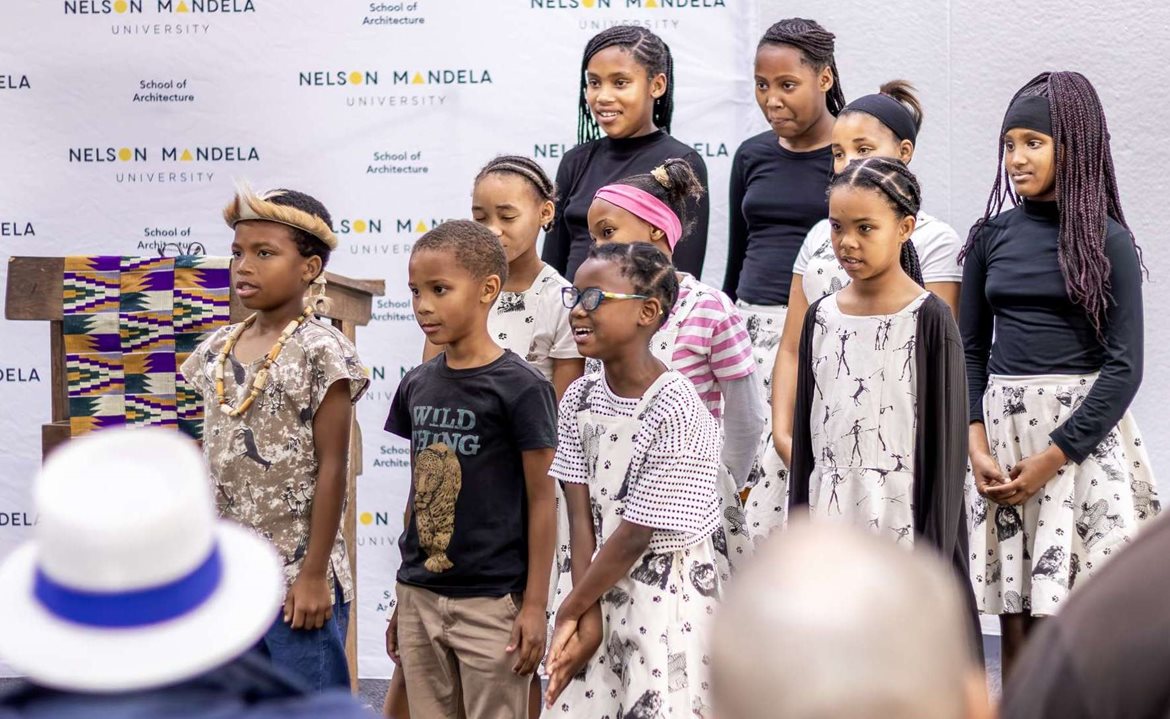
The Oeswana’s Children under Paramount Chief Gert C. Steenkamp
Indigenous participation formed an important part of the opening programme, with the presence of Paramount Chief Gert C. Steenkamp and the Oeswana’s Children, as well as Chief Zenzile Khoisan, as keynote speaker of day two. The programme also included a ceremonial signing associated with the inauguration of the IKSBEU.
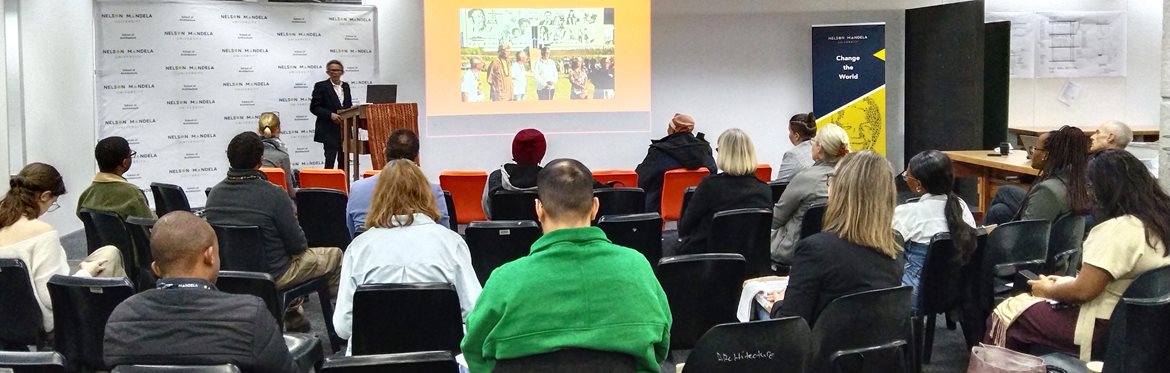
Chief Zenzile Khoisan as keynote speaker
The exhibition Under the Same Sky: Dwelling with the Ancestors, curated by Dr David Eduardo Morocho Jaramillo, postdoctoral fellow at the School of Architecture also featured at the conference.
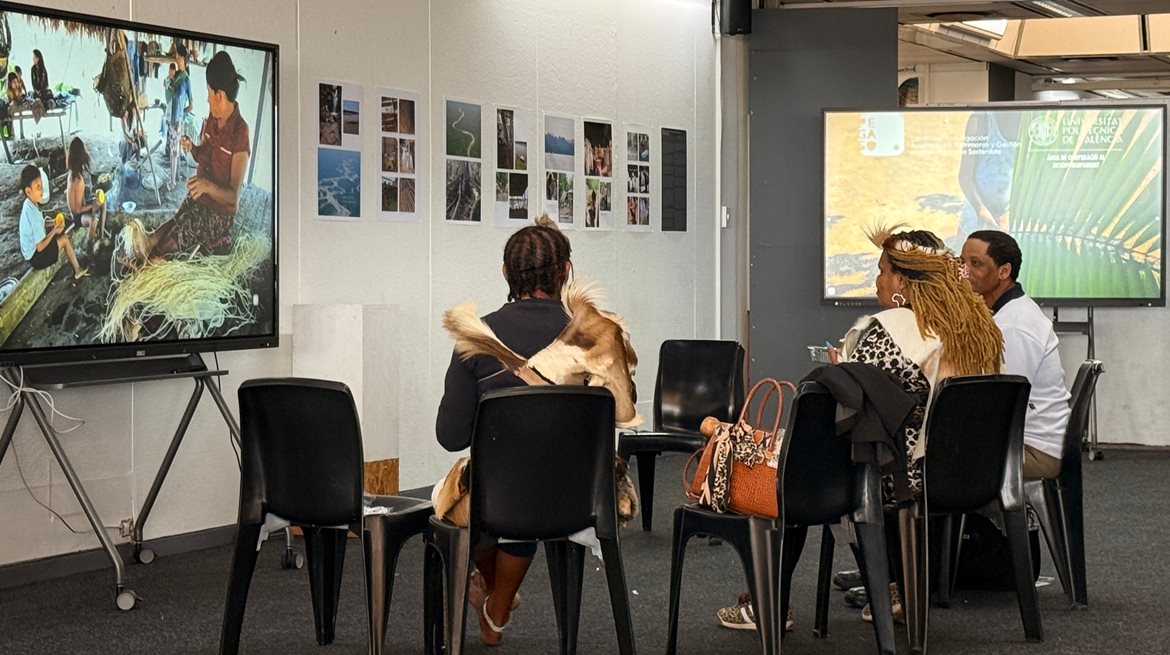
Indigenous Leaders enjoying the documentary screening and exhibition by Dr David Morocho
Through stories, interviews, songs and documentation from the Amazon, the exhibition created a space for dialogue between the SAJAH conference delegates and the Indigenous Knowledge Holders.
The 2026 SAJAH Annual Conference emphasised the importance of IKS in advancing scholarship across arts and architecture.
Across interdisciplinary collaboration, international contributions, the exhibition and Ceremony by IKSBEU, the event highlighted the role of Indigenous knowledge of theories in shaping resilient, ethical, and community‑engaged futures, said Prof Minguzzi.
By integrating academic discourse with creative practice, the conference positioned SAJAH as a critical platform for inclusive dialogue and global scholarly exchange.