At the foreground of this year’s conference was “How, AI is advancing Research and Innovation in service of people and planet”, all closely linking to the University’s Vision 2030 mandate.
The five-day programme, featuring various departments, placed artificial intelligence, research, innovation, sustainability and human-centred development at the centre of the week.
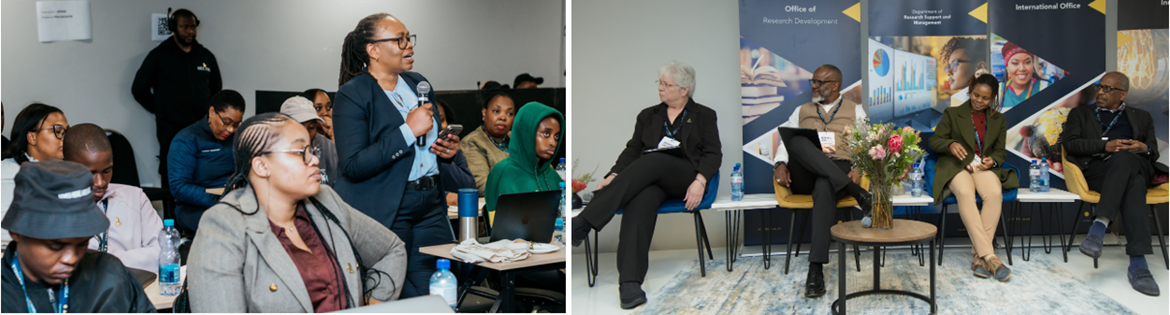
Plenary Room sessions explored The Mandela We Want, with sessions focusing on advancing research excellence, supporting researchers and strengthening collaboration opportunities. Delegates also engaged in discussions on transdisciplinary research and sustainable futures, highlighting the power of collaboration across disciplines.
The headline session “Artificial Intelligence in Service of People and Planet”, explored AI's implications for education, society, accessibility, governance, innovation and the future of humanity. A particularly important message from the keynote was that AI should remain human-centred and directed toward sustainable development, rather than technology becoming an end in itself.
The South African International Maritime Institute (SAIMI) hosted a session, titled “The Role of Maritime Technologies in Forging Intelligent Futures”, focusing on intelligent maritime technology. This session kicked off with Dr Nomtha Hadi setting the scene by framing maritime technology research as a driver for innovation and sustainability. Presentations were shared on positioning the region for the smart port transition, cyber-resilient navigation, industry readiness and the regulatory landscape and emerging research in marine robotics, demonstrating solutions that can be provided by intelligent maritime systems.
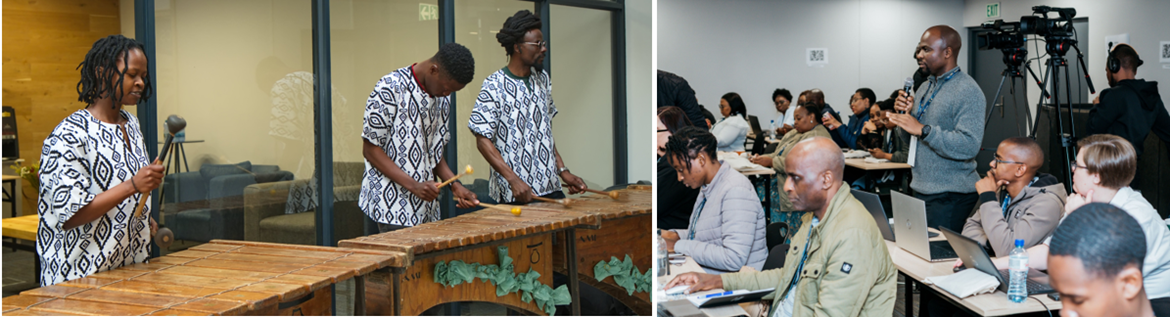 The Department of Agricultural Sciences hosted a full-day seminar focusing on agroecology, Indigenous foodways, food production, sustainability, food security, Indigenous Knowledge systems, biodiversity and social justice. The department highlighted how the 2026-theme was not limited to computer science or AI, connecting intelligent technologies and research with environmental, agricultural, social and community challenges.
The Faculty of Humanities explored the theme “Humanising Innovation, Innovating Humanity.” This theme spoke directly to the University’s 2026 institutional theme. For the Humanities, however, the rise of artificial intelligence is not simply a technological conversation. It also talks about culture, ethics, identity, knowledge and power – and one in which Africa must have a voice. Putting Africa at the centre Executive Dean Professor Pamela Maseko, said the rapid development of AI presents an opportunity for the Humanities to play a more central role in shaping the future.
Experts and researchers from the Nanomedicine platform, unpacked the convergence of Nanomedicine and Indigenous Medicine, exploring innovative approaches to healthcare, indigenous knowledge systems, and future research opportunities that could transform health outcomes and scientific discovery. The core focus was unpacking how modern nanotechnology can validate, scale and safely integrate traditional African herbal remedies and indigenous knowledge into mainstream healthcare.
The Mandela Undergraduate Research Academy (MURA) featured research presentations by undergraduate researchers from different disciplines. They presented innovative projects ranging from educational interventions to Artificial Intelligence applications in e-commerce and information systems, demonstrating the next generation of research talent and impact-driven scholarship. The programme was designed to expose students to research and develop as the next generation of researchers.
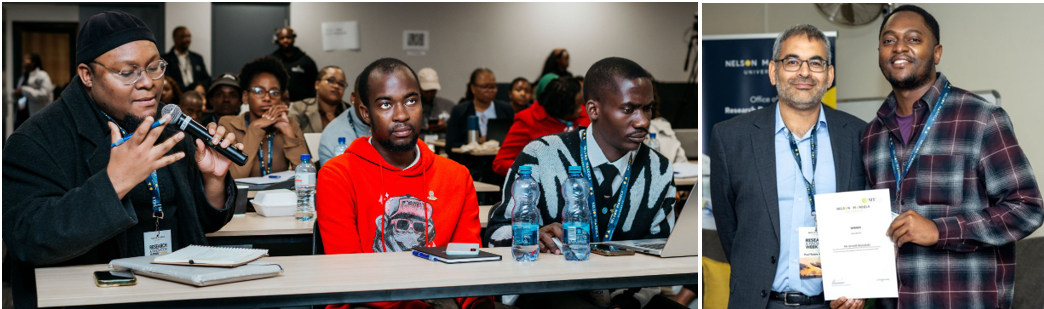
An annual highlight was the 3-Minute Thesis competition, where PhD researchers have three minutes to communicate their research and its significance to a non-specialist audience. This year 17 PhD candidates competed, with a Physics PhD candidate, Arnold Mutubuki, taking the title and progressing to represent Mandela University at the national competition in Bloemfontein.