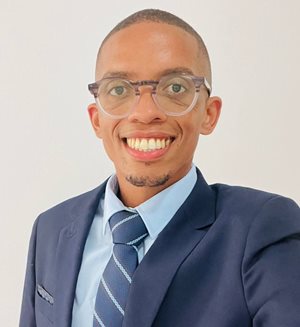
 By Adriaan Andrews
Adriaan Andrews is a lecturer in the School of Industrial Psychology and Human Resources, at Nelson Mandela University
It is an important industrial, economic and educational centre in the Eastern Cape, yet it faces challenges that increasingly demand a collective response: service-delivery pressures, infrastructure constraints, unemployment, skills shortages and institutional-capacity challenges.
The question, therefore, should not only be what is wrong with Nelson Mandela Bay Municipality?
It should also be:
What knowledge, expertise and institutional resources already exist within the Metro that could help address these challenges?
The Municipality cannot address these challenges alone. At the same time, higher-education institutions cannot remain largely observers of the city's problems.
Nelson Mandela Bay needs a stronger relationship between local government and higher education based on co-production: bringing municipal experience and authority together with academic knowledge, research and technical expertise to define problems, develop solutions, implement interventions and evaluate their impact.
The challenges are interconnected
The Municipality's Integrated Development Plan (IDP) identifies challenges including basic-service pressures, infrastructure backlogs, informal settlements, financial constraints, revenue collection and governance concerns. These challenges do not exist independently.
The Auditor-General's 2024/25 assessment of South Africa's metropolitan municipalities reinforces the seriousness of the broader institutional environment.
None of the country’s eight metros achieved a clean audit, while weaknesses in institutional capability, planning, monitoring and financial management remained significant concerns. Nelson Mandela Bay also faced financial pressures during the period.
These findings should certainly attract scrutiny and accountability. But they should also prompt another question:
How do we build the institutional capability required to address these problems sustainably? Accountability is essential, but on its own, it does not create the skills, systems, knowledge and organisational capability required to improve performance.
This is where the relationship with higher education becomes particularly important.
Local government requires expertise in finance, engineering, planning, information technology, human resources, law, economics, data analysis, environmental management and many other fields. Yet local government can experience significant skills and capacity constraints.
At the same time, Nelson Mandela Bay is home to higher-education institutions with substantial intellectual, technical and research capabilities. There is therefore a striking opportunity.
The question is not whether academics should “fix” government, but whether the expertise already present within the city’s higher-education ecosystem can be more deliberately connected to municipal priorities. This distinction is important because universities and municipalities possess different forms of knowledge.
The Municipality possesses direct operational experience, institutional authority and knowledge of the realities confronting communities. Higher education possesses research expertise, specialised knowledge, methodological capability and access to evidence from beyond the immediate local context.
Neither possesses the complete solution.
The opportunity lies in bringing these different forms of knowledge together.
From consultation to co-production
There is a difference between consultation and co-production.
Consultation might involve asking an academic for advice. Collaboration might involve a university and municipality working together on a project. Co-production goes further. It means jointly understanding the problem, jointly generating evidence and jointly developing solutions.
Imagine, for example, that the municipality identifies a persistent organisational-capacity problem. Rather than treating it as an isolated administrative issue, its practitioners and academics could work together to diagnose its causes.
Municipal officials contribute contextual and operational knowledge. Academics contribute organisational research, methodology and comparative evidence. Together they develop an intervention. The municipality implements it, while the university contributes to evaluation and learning.
The objective would not be to create another temporary project, but to empower the municipality with greater capacity to solve similar problems itself.
That is the essence of co-production.
The Metro’s challenges are not only infrastructure or financial problems, but also as people and organisational problems.
Who has the skills required?
Where are the capability gaps?
How is institutional knowledge retained?
How are employees developed?
How are leaders equipped?
How is succession managed?
How does an organisation learn from failure?
How does it build the capability to perform better over time?
These are questions directly connected to institutional capacity.
An Industrial and Organisational psychology and human resource partnership could contribute to workforce planning, organisational diagnosis, leadership development, skills development, talent management, succession planning, organisational culture and change management.
Engineers can contribute to infrastructure challenges. Economists can contribute to economic-development questions. Spatial planners can contribute to urban development. Data specialists can strengthen evidence-based decision-making.
The point is not that one discipline has the answer but that the Metro contains a significant body of knowledge and expertise that could be more deliberately connected to the problems the city is trying to solve. The university should therefore be seen not merely as a producer of graduates, but as part of the city’s knowledge infrastructure.
The employment challenge further demonstrates why this relationship matters.
Recent labour-force data reported unemployment of 33.1% in Nelson Mandela Bay in the second quarter of 2026. Young people, graduates, households and communities struggling to participate meaningfully in the economy.
Unemployment cannot be solved by the Municipality alone. It requires collaboration between government, business, education and communities around skills development, local economic development, entrepreneurship and pathways into employment.
There are already examples of partnership. In 2026, the Municipality participated in a three-year partnership aimed at strengthening digital skills, innovation and enterprise development among SMMEs.
The opportunity is to build on this principle and make collaboration more systematic.
What might this look like?
Nelson Mandela Bay could establish a structured Municipality-Higher Education Co-production Framework.
The process could be straightforward:
Identify: The Municipality identifies priority problems through its Integrated Development Plan (IDP), Service Delivery and Budget Implementation Plans (SDBIP), annual reports, oversight processes and community priorities.
Map: Higher-education institutions identify academics, researchers and research centres with relevant expertise.
Co-define: Municipal practitioners and academics jointly diagnose the problem.
Co-produce: They develop evidence-informed interventions.
Implement: The Municipality retains responsibility for implementation.
Evaluate: Academic partners contribute research and evaluation capacity.
Institutionalise: Successful interventions become part of municipal systems, knowledge and capability.
The objective should not be to create another short-term project, but to build lasting organisational capability. If a partnership helps identify a skills gap, the outcome should not simply be a report describing that gap but contribute to a system through which the Municipality can identify and address similar capability gaps in future.
If research helps identify why an organisational process is failing, it should help the organisation develop the capacity to recognise, address and learn from similar failures.
We already produce enormous amounts of information about the Metro through the IDP, Spatial Development Framework, SDBIPs, annual reports, Auditor-General reports, municipal budgets, National Treasury information, Cooperative Governance and Traditional Affairs (CoGTA) documents, provincial plans and Statistics SA data.
The question is whether we are sufficiently connecting that information to the people and institutions capable of turning it into organisational learning and practical solutions.
Accountability, good governance and financial discipline remain essential.
But criticism alone does not build institutional capability. When a report identifies a skills gap, we should ask how that capability will be developed. When infrastructure fails, we should ask what multidisciplinary expertise is required to understand why.
When unemployment persists, we should ask what the local labour-market evidence tells us about skills and economic opportunity. When organisational performance is weak, we should ask what interventions could strengthen the people and systems responsible for delivery.
This is where higher education can make a meaningful contribution.
The Municipality should not outsource its responsibility to universities, and universities should not attempt to govern the city. Rather, the two should develop a relationship in which each contributes what the other cannot easily provide.
Nelson Mandela Bay already has many of the ingredients required: municipal institutions, communities, industry, businesses, government departments and higher-education institutions with significant expertise.
What is needed is a stronger connection between them. The future of Nelson Mandela Bay cannot be the responsibility of the Municipality alone. It must become a shared institutional project. If we move from institutions working alongside one another to institutions thinking, learning and solving problems together, collaboration becomes more than a principle.
It becomes a mechanism for building institutional capacity.
And perhaps that is where the opportunity to save the Metro lies: not in finding one institution capable of solving Nelson Mandela Bay’s problems, but in building an ecosystem capable of solving them together.