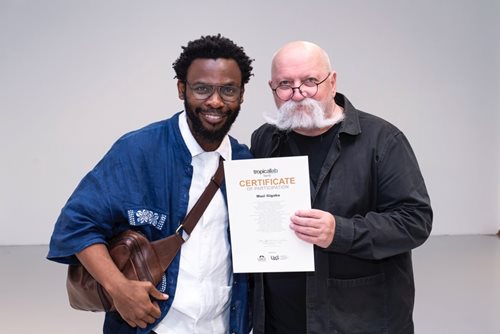
 Muzi Gigaba together with Professor Milenko Prvački, the founder of the Tropicallab residency for international academic artists in Singapore
Gigaba was the only African selected to participate in the highly competitive programme at LASALLE, one of the leading specialist arts institutions in Southeast Asia and internationally, which brought together 24 student-artists from diverse cultural backgrounds.
Participants produced artworks informed by their lived experiences, including their brief period in Singapore, while embracing cultural diversity, exchanging ideas and establishing professional connections.
For Gigaba, a PhD candidate and Arts Entrepreneurship lecturer in the Visual Arts Department at Nelson Mandela University, the experience reinforced the importance of an artistic practice grounded in South African lived experience, culture and history.
“The residency reinforced that international opportunities are not merely platforms for visibility. They are spaces in which artists represent themselves, their institutions, communities and, at times, their national or continental contexts,” said Gigaba.
“I am grateful to have participated in this successful initiative, through which the host institution supported and nurtured emerging artists from around the world through field trips, access to professional curators and assistants, and opportunities to learn from experienced artists. Above all, it advanced the internationalisation of emerging and future academics.”
What set this residency apart?
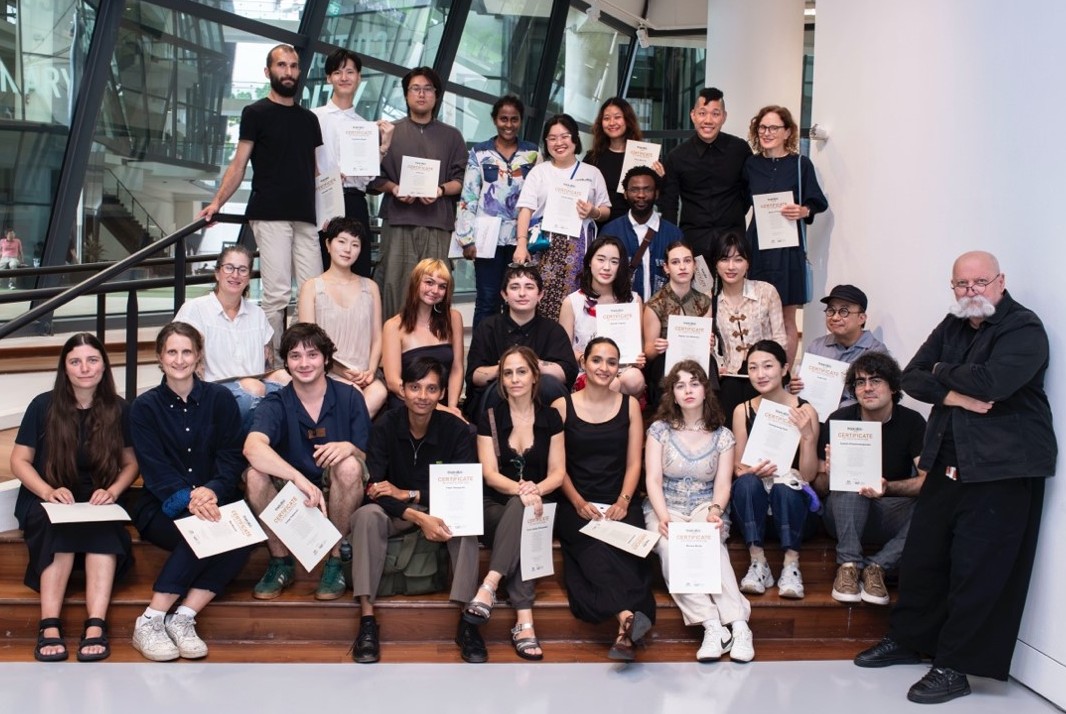
Gigaba’s participation in Tropical Lab 20, made possible through sponsorship from Nelson Mandela University’s Faculty Research and Engagement Committee grant, was particularly significant because the residency provided an opportunity for academic artists to engage with an international community of emerging creatives.
“This differed from some of the residencies in which I had previously participated, as those were focused on professional artists who had been established in the field for some time. Most previous residencies were less collaborative because participants were selected primarily on the basis of their recognised work or artistic reputation,” he explained.
“In contrast, this residency presented the stimulating challenge of being surrounded by predominantly younger artists with fresh ideas and diverse contemporary creative approaches.”
These approaches spanned a wide range of practices, including sewing, printmaking, mixed media, performance, digital, video and sound art, as well as software, generative, internet and game art, virtual and augmented reality, 3D printing, artificial intelligence, bio-art and robotics.
As an nGAP (New Generation of Academics Programme) lecturer, Gigaba also viewed the residency through the lens of his role as an educator. The experience provided him with valuable insights to share with students about what they might encounter when pursuing international opportunities.
“It also enabled them to consider whether they would like to explore creative practices beyond the traditional disciplines in which they have been trained.”
Inspiring the next generation of artists
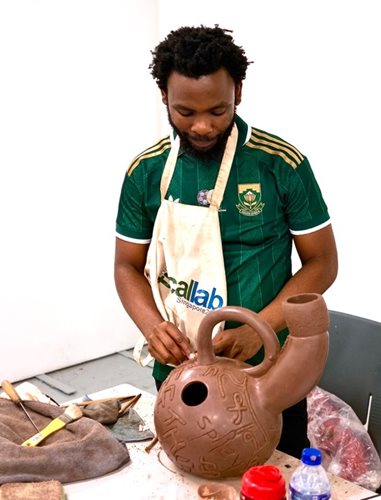 Beyond his own artistic and academic development, Gigaba is passionate about uplifting his students and contributing to the development of the next generation of artists.
In the previous year, he incorporated the process of accessing international professional platforms into his curriculum, encouraging students to develop the confidence and readiness to pursue opportunities beyond South Africa.
Drawing on his recent residency experience, he intends to further position the Arts Entrepreneurship module as a space where students can connect creative practice with the professional realities of the arts sector.
“The module will encourage students to understand artistic independence not only as creative autonomy, but also as the capacity to plan projects, organise resources, communicate professionally and make informed career decisions,” said Gigaba.
“It will further expose students to international academic and professional opportunities that can broaden their research, strengthen their artistic practice and support the development of meaningful scholarly relationships.”
In this way, Muzi Gigaba hopes his students will participate in sustained cross-cultural exchanges of knowledge that enrich their academic development, expand their creative possibilities and contribute to meaningful long-term professional trajectories.
For Gigaba, the value of the residency extends beyond his own artistic and academic development. The experience also highlighted the potential for Nelson Mandela University to create similar opportunities for international exchange and collaboration.
“Being part of this residency and forming new future collaborations could inspire our own university to initiate similar experiences, in which we might also host international collaborators, as they are keen to learn from different cultural and social contexts.”
Through these experiences, Gigaba hopes to contribute to a culture of sustained cross-cultural exchange at the University – one that benefits not only artists and academics, but also students who are preparing to navigate an increasingly interconnected creative and professional landscape.