Organised by the University’s Indigenous Knowledge Systems of the Built Environment Unit (IKSBEU), based in the School of Architecture, the Matjieshut was originally built during the 2025 Heritage Month workshop.
Returning to the structure a year later, the 2026 workshop focused on restoration, maintenance and, importantly, the continuity of Indigenous building knowledge. Led by Associate Professor Magda Minguzzi, the initiative brought together First Nations Knowledge Holders, Indigenous youth, University students, academics and staff from different institutions and disciplines.
The workshop created a collaborative space for safeguarding and transmitting Indigenous knowledge through practice and exchange.
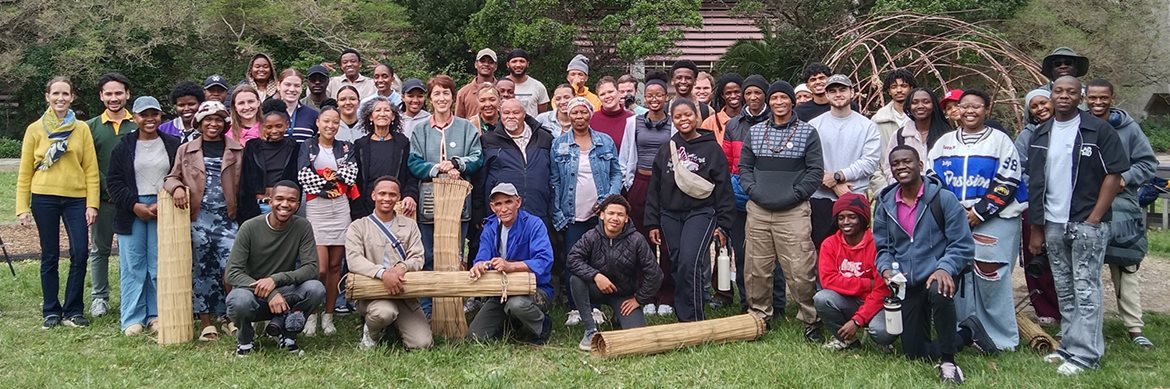
Key contributors included Chief Jean Burgess of the Ghonaqua People, who guided the ceremonial component, Indigenous storyteller and cultural practitioner Jason Jacobs and Manfred Adams, who served as workshop facilitators, and knowledge holders Margaretha Ida Cloete, a skilled matjie weaver, and Hendrik T. Brandt, whose expertise includes harvesting, weaving and structural construction. Their involvement enabled knowledge to be shared through demonstration, conversation and hands-on practice.
The broader IKSBEU project team reflected the Unit’s collaborative and transdisciplinary approach. It included Lucy Vosloo, Lecturer in the Architecture Technology Department; Nii Botchway from the Visual Arts Department, Godfrey Damons from the Horticulture Department, and Prof Subeshini Moodley from the School of Language, Media and Communication, together with students involved in documentation and communication activities.
Intergenerational transmission was central to the workshop, ensuring that Indigenous practices are not only documented but learned, embodied and carried forward by younger generations. The workshop also connected Indigenous knowledge with formal education and academic exchange, said Prof Minguzzi.
Participants included second- and third-year History of Architecture students and students from Media and Communication, Dr David Eduardo Morocho Jaramillo, Postdoctoral Fellow at the School of Architecture, Relebogile Mphahlele, a master’s student from Tshwane University of Technology and Dr Janeke Thumbran, Head of the History Department at Rhodes University. Their participation encouraged multidisciplinary dialogue and exchange.
The restoration highlighted the importance of ongoing care in maintaining living structures. Parts of the timber framework had been damaged by termites, requiring affected elements to be identified and replaced.
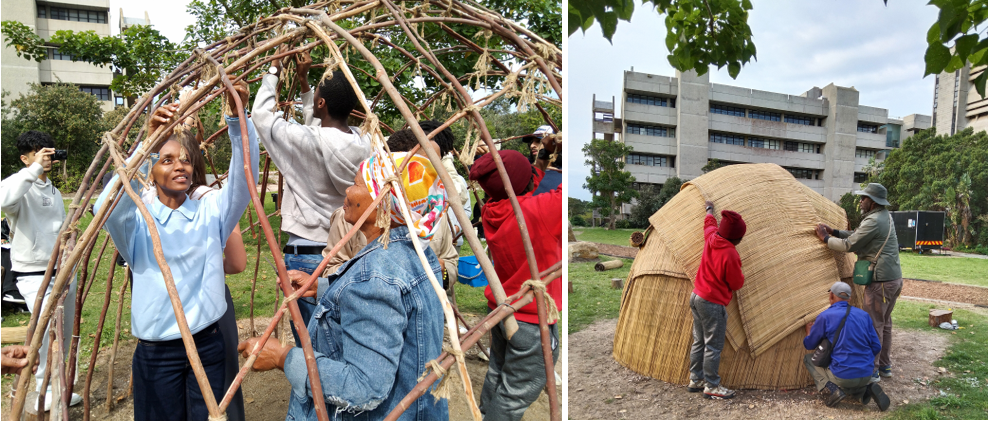
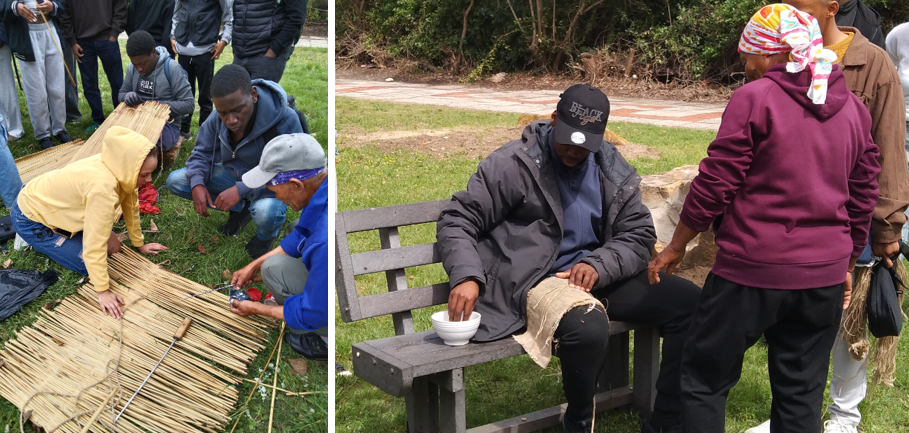
Suitable natural materials were harvested from areas surrounding the University campus, with participants experiencing the full material process, from identifying and gathering resources to preparing and incorporating them into the structure. A central activity was learning to prepare and weave the matjies.
Rather than studying Indigenous construction as an abstract subject, students learned through observation, repetition and participation. The process demonstrated how knowledge is embedded in gestures, materials, skills and relationships, with learning by doing transmitting ancestral knowledge, said Prof Minguzzi.
The workshop also brought together the Indigenous communities, knowledge holders, younger generations, students, academics and University departments around a shared commitment to cultural continuity.
The Matjieshut is therefore a living site of knowledge exchange where restoration provides an opportunity to strengthen relationships, transmit skills and keep Indigenous building knowledge active across generations.
In this way, the 2026 workshop naturally continued the initiative begun in 2025: moving from building the Matjieshut together to learning how to care for it, restore it and preserve the knowledge needed to build it again in the future.
The workshop was funded by the Teaching Development and Innovation Fund and the Department of Architecture.