The Inauguration Ceremony of the Signing was held on 5 September, during the SAJAH Conference 2026 at the University’s School of Architecture and marked a defining milestone for IKSBEU, reflecting both the Unit’s values and the University’s broader Vision 2030.
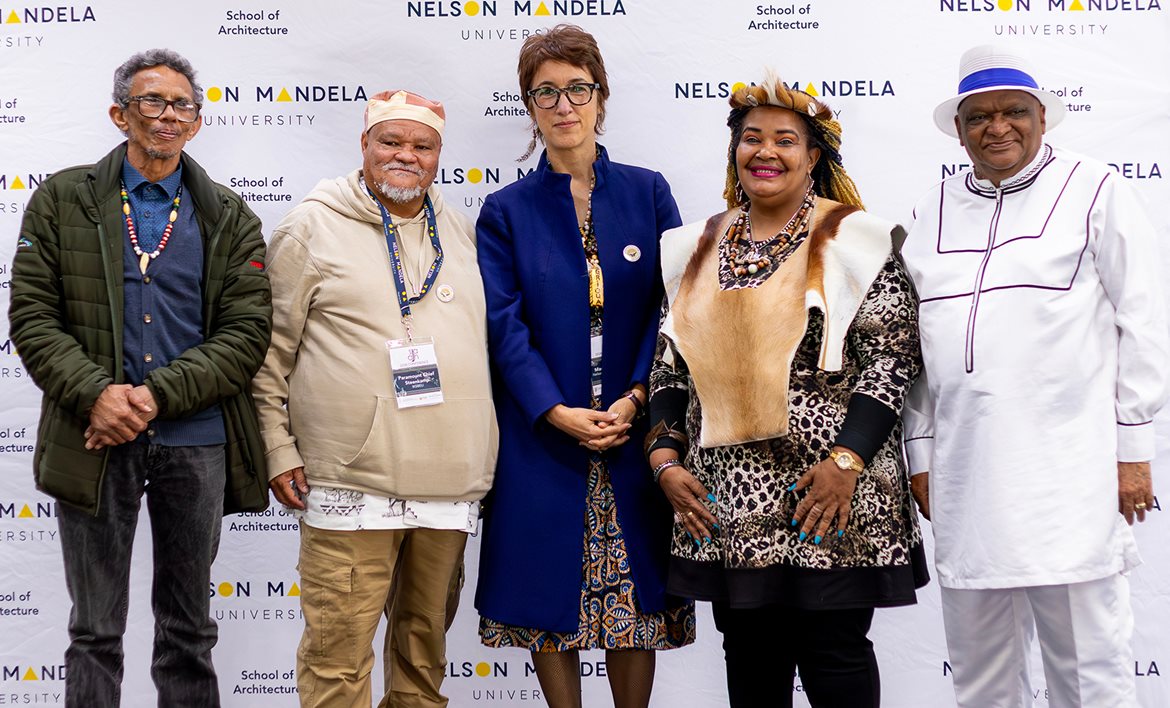
The First Nations Leaders representing the four indigenous houses part of the Unit. From left, Chief Zenzile Khoisan, Gorinhaiqua, Cape Khoi; San Nation, under the leadership of Paramount Chief Gert Steenkamp; Professor Magda Minguzzi (Unit Team leader); Queen Gail Baatjies, Koranna Kraal Peoples, and Drs King Vivian Kok, Griqua Nation (Adam Kok III) (Photographs Rene Heunis)
The codes were co‑designed and written collaboratively by the Unit’s members, both Indigenous and University representatives.
“This act was more than symbolic: it embodied trust, respect, and a collective commitment to honour the principles guiding ethical engagement. Being together was itself an act of dedication, commitment, love and recognition that the Unit’s work matters deeply to all involved”, said Professor Magda Minguzzi, Team Leader of the IKSBEU .
For over a decade, Prof Minguzzi has collaborated in research and engagement projects with First Nations Leaders and their communities. Since the Unit’s establishment, the need to co‑create and adopt guiding principles became clear. Rooted in Indigenous protocols, the Codes affirm values of mutual trust, accountability, consultation, reciprocity and shared benefit in both research and project outcomes.
The SAJAH Conference 2026, themed Place, Practice, and Knowledge: Indigenous Knowledge Systems in Arts and Architecture, provided the perfect platform for the Ceremony. By situating the signing within a gathering of national and international scholars, the event highlighted the global relevance of Indigenous theories of knowledge and their role in shaping sustainable, culturally grounded approaches to the built environment.
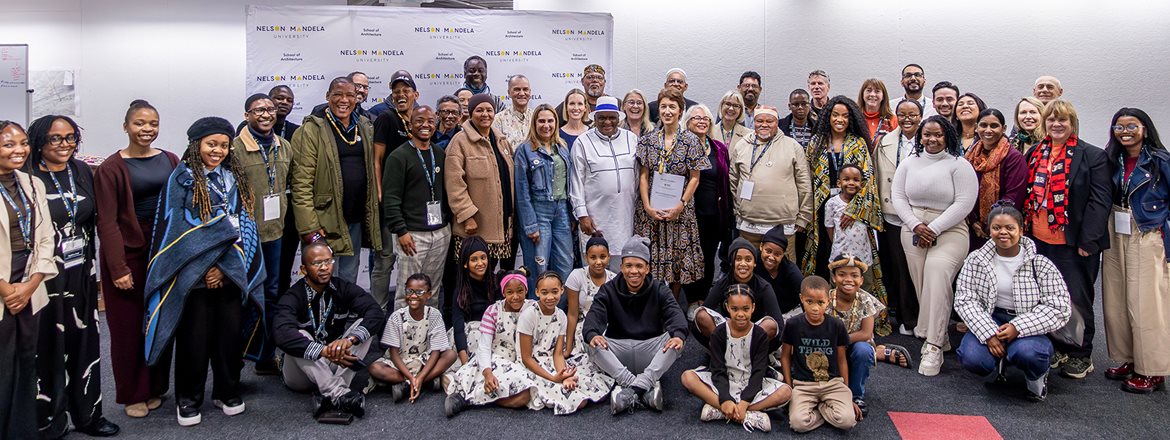 Distinguished leaders who travelled from afar to participate, included Queen Gail Lawrence, King Drs Vivian Kok, Paramount Chief Gert Corneluis Steenkamp, Chief Zenzile Khoisan, Chief Eugene Damons, Chief Wallace Williams and Yardin Booysen. The signing included also Mandela University academics and students, namely Nana Botchway Ntow, Apɛsɛmakahene Pakro Traditional Area, Prof Alethea de Villiers, Godfrey Damons - First Nation descendant, Lucy Vosloo, Dr David Morocho Jaramillo (Postdoctoral fellow), Kawthar Rashid Jeewa (doctoral student in Architecture) and Mohau Setlhako. Their presence emphasised the unity and shared vision of the Unit.
The Codes were officially witnessed by Prof Sudesh Rathilal, Executive Dean of the Faculty of Engineering, the Built Environment, and Technology, and Prof Tirivavi Moyo, Faculty representative for the Research Ethics Committee. Their endorsement reinforced the institutional significance of the adoption.
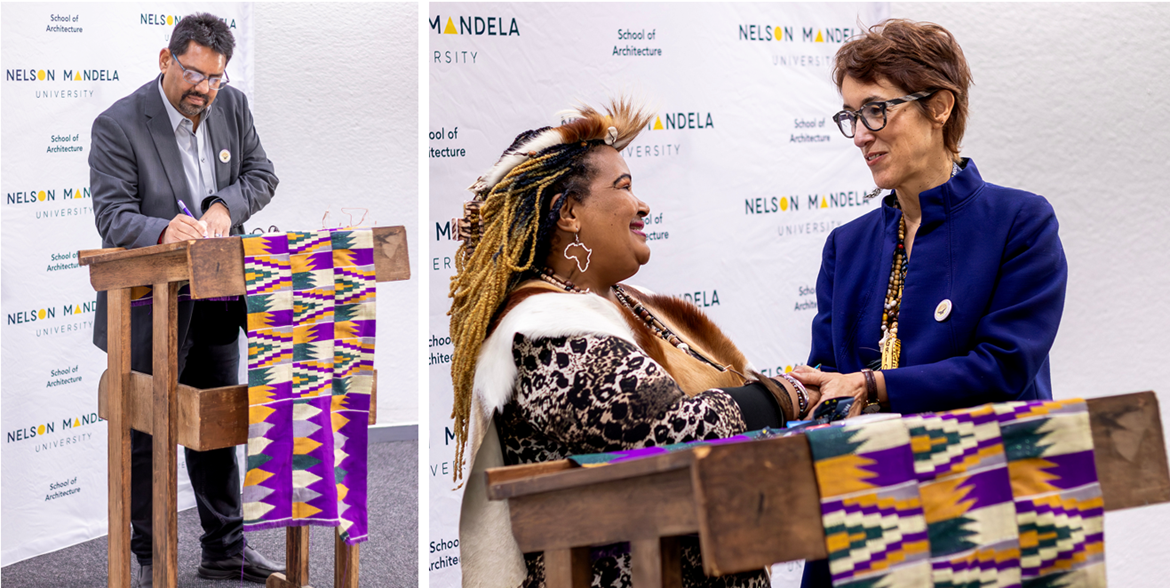
Professor Sudesh Rathilal, Executive Dean of the Faculty of Engineering, the Built Environment, and Technology signing the Codes as one of the witnesses. Queen Gail Baatjies, Koranna Kraal Peoples, after signing the Codes as one of the Unit Founders and member together with Prof Magda Minguzzi.
IKSBEU thanked the Director of the School of Architecture, Andrew Palframan, Prof Subeshini Moodley, Dr Yolanda Van Der Vyver, Heidi Botha and the many colleagues and SAJAH delegates who bore witness to this historic moment.
The signing of the Codes resonates strongly with Nelson Mandela University’s Vision 2030, which emphasises ethical leadership, inclusivity, transformative engagement with communities together with a transformative, inclusive and socially responsive higher education.
By embedding Indigenous Knowledge Systems into academic and professional practice, the University demonstrates its commitment to shaping a future grounded in respect, sustainability and shared responsibility, said Prof Minguzzi.
“This ceremony will be remembered as history in the making, a landmark in South Africa’s journey toward integrating Indigenous epistemologies into the built environment, and a shining example of how the University’s Vision 2030 is being realised in practice.Group photos of the IKSBEU Members together with the witnesses of the signing of the Code of Ethics and Code of Conduct.