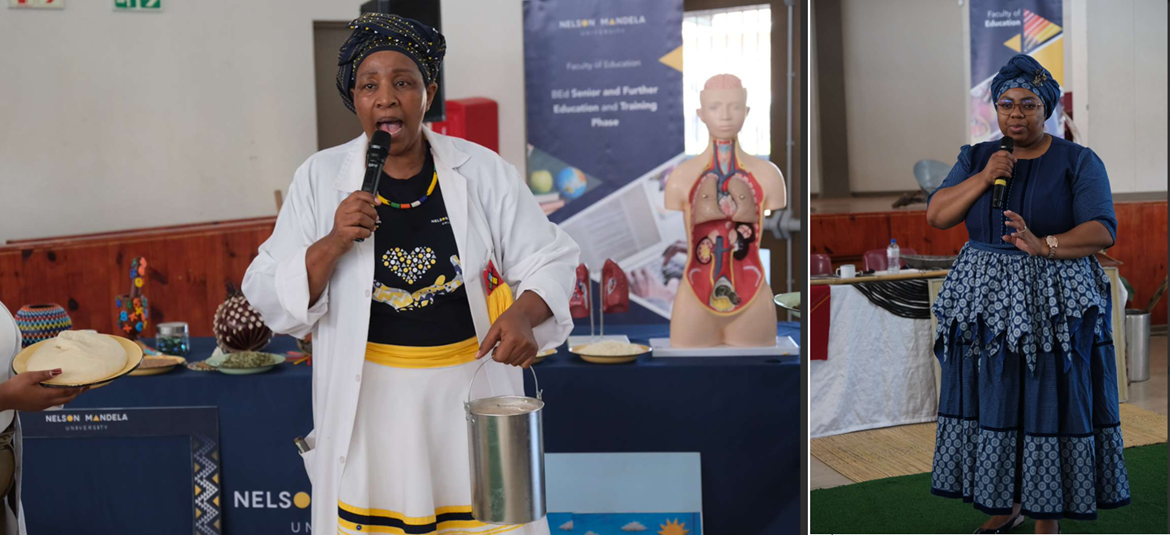
Drs Ayanda Simayi and Makhosi Madimabe-Mofokeng
Led by project leader Dr Ayanda Simayi, in collaboration with mathematics lecturer Dr Makhosi Madimabe-Mofokeng, the initiative explored how knowledge rooted in African cultures and community practices can make classroom learning more significant and relatable.
The celebration brought together cultural expression and practical learning, with learners engaging with scientific and mathematical concepts through familiar activities, such as bread-making, fermentation, beadwork, skipping games and hula hoops.
Traditional music, dance, poetry, cultural attire and food added to the festivities, highlighting the diversity of cultural practices within communities and the knowledge passed down through generations.
The IKS-STEM Heritage project extends beyond a Heritage Month celebration. It also equips final-year Bachelor of Education and Postgraduate Certificate in Education (PGCE) students with strategies for integrating Indigenous Knowledge Systems and African pedagogies into STEM teaching.
Through this approach, future educators are encouraged to connect formal scientific and mathematical principles with everyday experiences, helping learners recognise that knowledge can be developed and shared across different cultural contexts.
For example, fermentation provides an opportunity to explore scientific processes through traditional food and drink preparation, while beadwork and cultural games can introduce mathematical patterns, shapes and geometry.
By bringing community knowledge into the learning environment, the project promotes culturally responsive teaching while recognising the value of Indigenous Knowledge Systems in contemporary education.
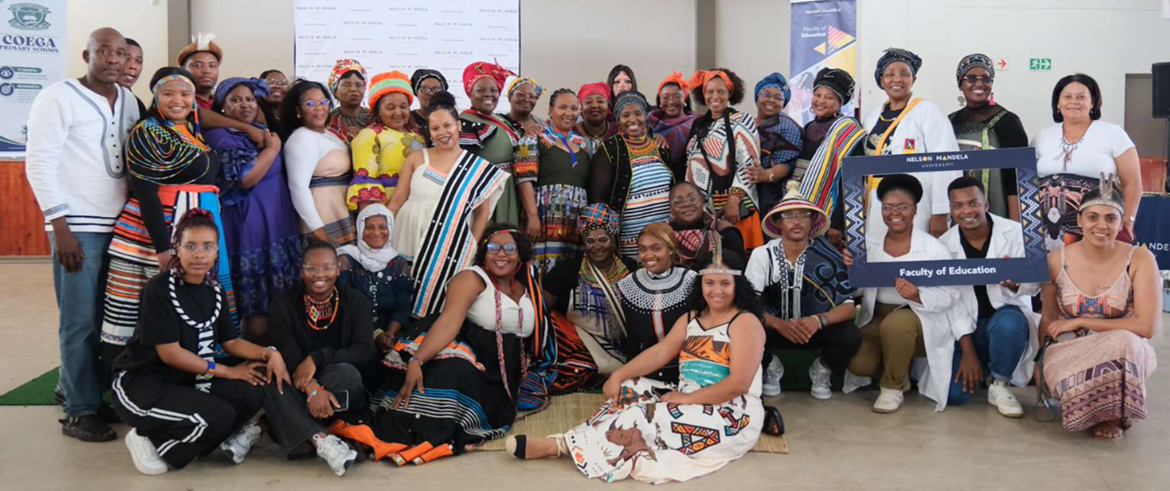
The celebration demonstrated how heritage can serve not only as a reminder of the past, but also as a valuable resource for teaching, learning and inspiring future generations of educators and scientists.
Watch the video