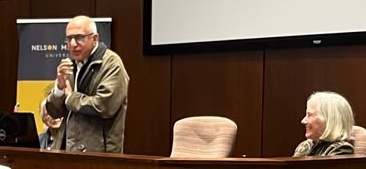
 Professor Saleem Badat
Prof Badat, a political activist and the first black Vice-Chancellor of Rhodes University, spoke passionately about leadership, transformation and the challenges facing higher education, asking: “Where do we build the depth and resilience for the next 30 years?”
Questions of belonging, power and transformation took centre stage at a dual book launch held at the South Campus Council Chambers on 16 September. The event encouraged academics to reflect on institutional culture and the experiences of those navigating South African universities.
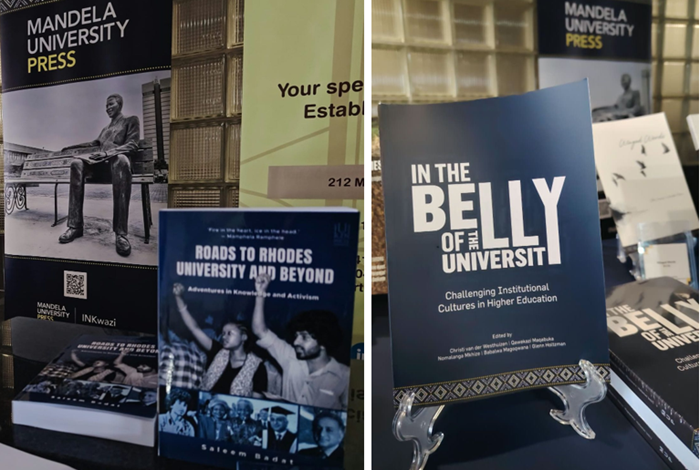
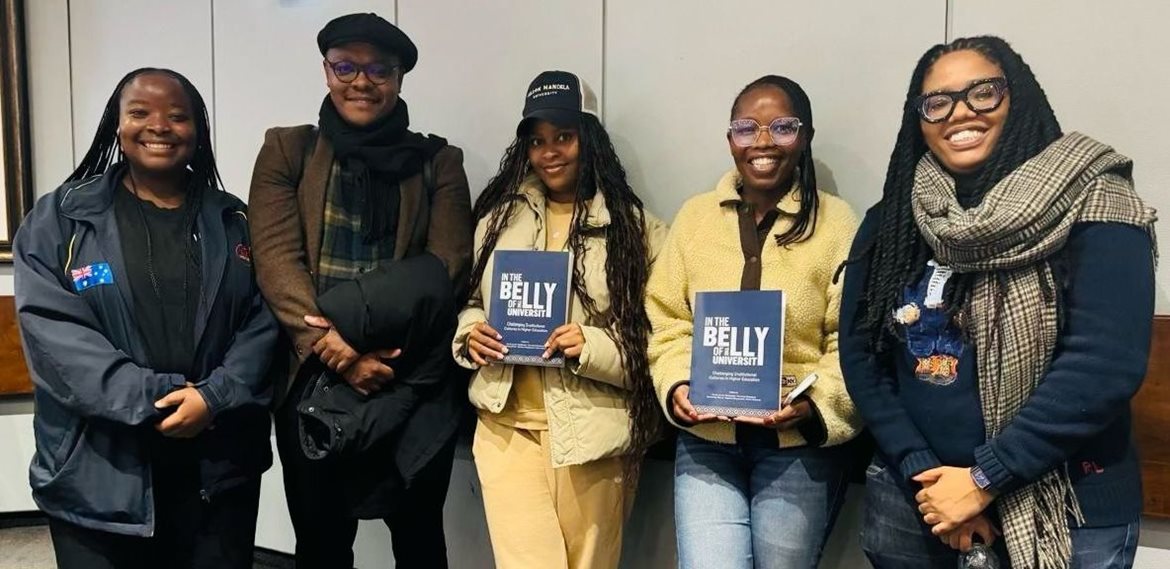
The discussion centred on the launch of two books: Roads to Rhodes University and Beyond, a memoir by Prof Saleem Badat, and In the Belly of the University, an autoethnographic account co-edited by Dr Qawekazi Maqabuka, Professors Nomalanga Mkhize and Babalwa Magoqwana, Dr Glenn Holtzman and Prof Christi van der Westhuizen.
Through their books, the academics and former university leaders examine how institutional culture is shaped not only by formal policies, but also by everyday interactions and decisions about who has access to power and resources.
As the authors of In the Belly of the University write:
“Universities across the world find themselves struggling with agonising and conflictual internal dynamics. In South Africa, the policy-driven project of transformation, aimed at upending oppressive raced and gendered power relations, has run up against institutional cultures, which spring from colonial longevities that persist into the present.”
The authors further argue that exclusionary practices continue at institutions of higher education, as reflected in official investigations and policy responses over the years.
The panel explored how institutional culture can be experienced through seemingly ordinary encounters that influence whether people feel that they belong.
Drawing on their lived experiences of working at various academic institutions, the authors challenged the idea that institutional culture is simply “a set of values published on a university website”.
Everyday experiences of power
Dr Qawekazi Maqabuka illustrated this through an experience from her early career as a lecturer. She recalled being told that whiteboards were reserved for professors when she requested one for her office. Instead, she was given Prestik to attach papers to her office wall.
When she offered to buy her own whiteboard, she said she was labelled a “diva”.
Dr Maqabuka said that, although the incident appeared simple, it demonstrated how institutional culture can operate through unwritten rules and reinforce who holds power.
“It's not written anywhere, but it shows you who has power,” reflected Dr Maqabuka.
Dr Glenn Holtzman offered another interpretation through the title of the book, In the Belly of the University. He explained that the university can “digest” people, particularly those who feel they were not meant to be there.
He also described the university as a womb where ideas can be developed and brought into existence, but where institutional pressures can sometimes prevent those ideas from being realised.
Prof Babalwa Magoqwana focused on the relationship between institutional priorities and the allocation of resources. She argued that a university's culture can be examined by looking at where it directs its money.
Prof Magoqwana also addressed what she described as an increasing emphasis on measurement and auditing within universities. She questioned whether academics whose work does not generate significant financial returns, particularly in disciplines such as philosophy, can become undervalued in systems increasingly focused on numerical indicators.
She further spoke about hyper-visibility and the ways in which everyday racism, sexism and homophobia can become normalised within institutions, causing harm to those who experience them. Her comments also raised questions about the ethics of teaching hungry students, as well as broader questions of dignity and equality.
Leadership and belonging
Prof Saleem Badat discussed institutional culture from the perspective of university leadership. Reflecting on his experience as a black vice-chancellor, he described the additional pressures of feeling that one has to prove one's worth.
He gave examples such as “having to arrive earlier, prepare more extensively and anticipate questions because you feel like you are constantly being tested”.
He also recalled a comment from one of his referees during his appointment to Rhodes University: “Saleem is ready for Rhodes, but is Rhodes ready for Saleem?”
The remark raised a broader question about whether institutions are prepared to accommodate the people and ideas they recruit.
Transformation and collective action
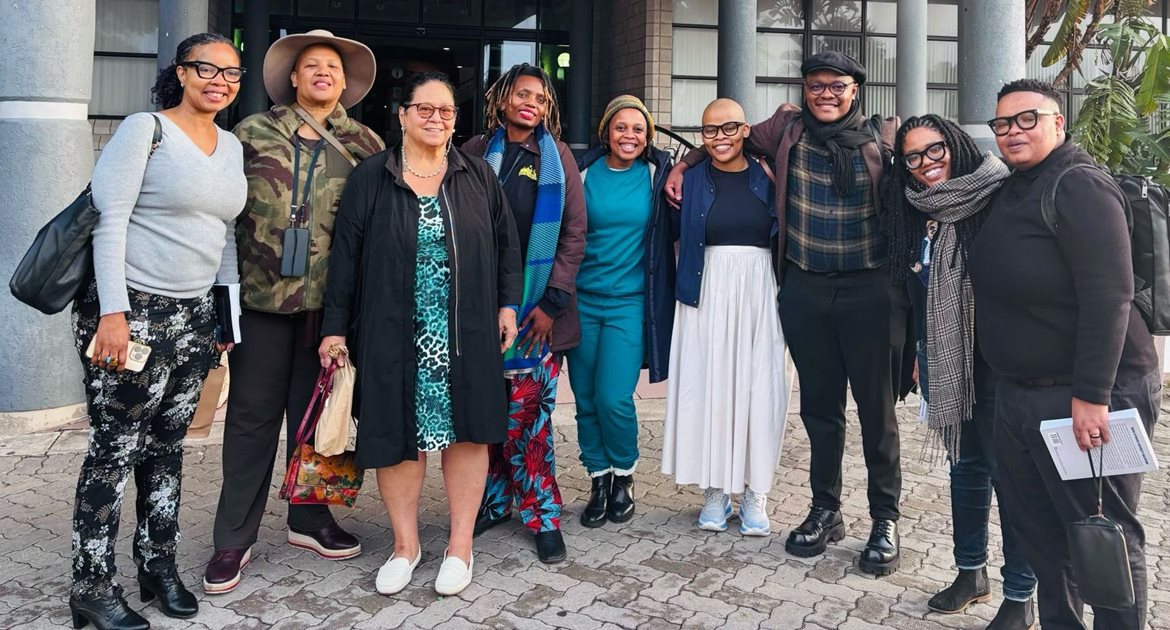
The launch also examined the history of transformation at universities in the Eastern Cape.
Dr Pedro Mzileni highlighted the role of collective organising in challenging institutional structures, including collaboration between students and workers during campaigns for insourcing associated with the #FeesMustFall movement.
Dr Mzileni said the #FeesMustFall movement demonstrated that institutional culture is not necessarily fixed, but can change through collective action, and that transformation remains an ongoing process.
Prof Badat said that universities and society are still grappling with human-made problems and that it is necessary to build a non-racial society.
He reiterated that leadership means having a set of values and being principled about them, before challenging the audience with three questions:
-
What kind of society do you want to be part of?
-
How will you build the depth and resilience for the next 30 years?
-
What are we leaving for the next generation?
In the Belly of the University is available for R325 at the Nelson Mandela University Shop at its new location on Ocean Sciences Campus.