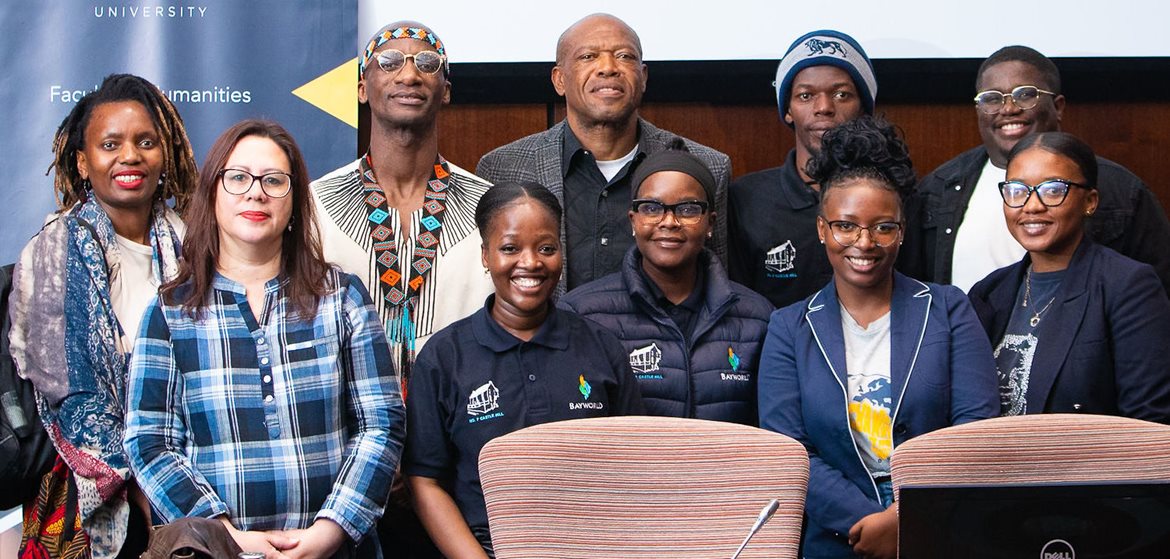
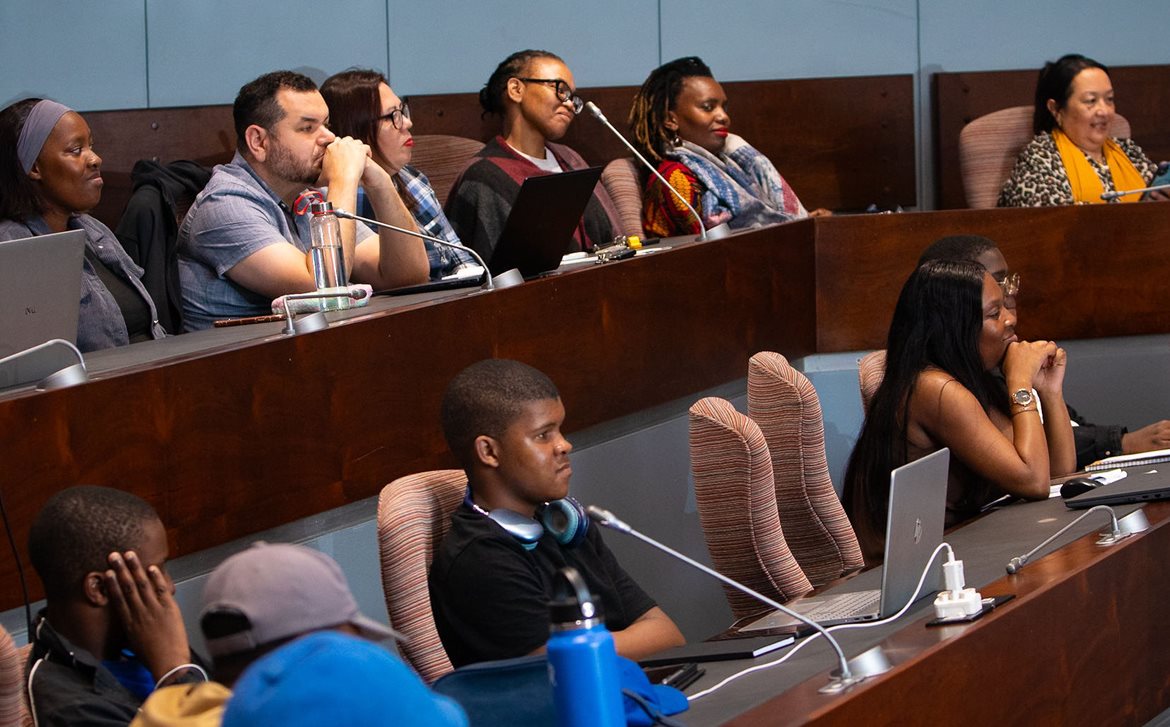
Speaking at a recent seminar titled “Orlando Stadium as the Cultural Space of Black Transnational Dialogue,” Dr Kumalo presented the stadium as a site of cultural exchange, political engagement and Black transnational dialogue.
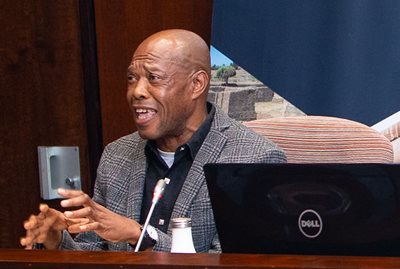 Dr Vusumzi Kumalo
The seminar forms part of his broader research project on Orlando Stadium and the surrounding community.
While his earlier work published in a British leading journal of sports, The International Journal of the History of Sports examined the struggle of Orlando residents for access to recreationaall spaces, the current study turns to what happened within the stadium when it became an important public and a cultural hub of Soweto.
From sport and entertainment to protest and politics
Dr Kumalo argued that the political and cultural functions of stadiums have received limited scholarly attention. Under apartheid, segregated stadiums formed part of the racial geography of South African society. An example being the narrowed political function of white stadiums, which carefully choreographed celebrations of white victory and struggles over the development of apartheid policy.
“When the apartheid government built these stadiums, it envisioned them as sites where loyalty could easily be cultivated as spaces for moralizing leisure, whereby one would go for breathtaking athletic performances and simply forget to think about racial oppression and apartheid generated socio-economic problems and suffering,” he explained.
Orlando Stadium, however, developed a distinct significance within Soweto, becoming a space where sport, culture, entertainment and politics intersected.
“This work is quite complex because it bears that interplay of the stadium between the play, protest, entertainment and politics,” said Dr Kumalo.
The roots of a transnational Black dialogue
Central to the seminar was the concept of a transnational Black dialogue – the exchange of intellectual, political and cultural ideas between Black communities across geographical boundaries.
Dr Kumalo traced the roots of this dialogue to the experiences of slavery, colonialism and racism, arguing that Black intellectuals and cultural figures responded to racial oppression through literature, music, poetry, film, religion and other forms of cultural expression.
An important early moment in this exchange was the arrival of African American singers, The Virginia Jubilee Singers in South Africa during the 1890s. Their ‘Negro spiritual songs’, rooted in the experience of slavery, expressed suffering, endurance, faith and survival, and resonated with the colonial struggles of the Black South African audiences.
“The arrival of these singers initiated what we call the black dialogue between the African-Americans and South Africans. Their influence had an impact on the nascent African nationalism, racial uplift and issues of self-help and black economic independence,” Dr Kumalo said.
Revitalising the dialogue at Orlando Stadium
Dr Kumalo argued that the transnational dialogue initiated by African-American artists in the 1890s was revitalised by African American singers who performed from the 1960s until the 1980s in Orlando Stadium.
Their music brought experiences of segregation, racial oppression, resilience and Black pride into conversation with the realities of apartheid South Africa. Importantly, Dr Kumalo argued that political communication did not always require an explicitly political message, and music itself could become a creative vehicle for political meaning.
Because of music that expressed Black experiences and daily struggles, Dr Kumalo described the performances as having both “an emotional, and political impact” on audiences at Orlando.
Among the examples discussed were American musicians like The Staple Singers who became a favourite musical group of Dr Martin Luther King Jr. during the Civil Rights Movement - Isaac Hayes, whose music, appearance and self-presentation as “Black Moses” offered powerful visual and cultural representations of Black identity and resistance.
Through such performances, Orlando Stadium became a space where African-American and South African experiences of racial oppression intersected.
Reconsidering Orlando Stadium’s place in history
 Nompumelelo Fukuthwa
Responding to the presentation, Nompumelelo Fukuthwa, an MA History candidate, noted that the research challenges conventional understandings of political space.
“The paper challenges us to rethink what we mean by a ‘political space’ because politics does not necessarily have to take form in a political rally, protest or march,” she said.
Fukuthwa argued that the performances of African-American musicians brought “stories of racial oppression, of the struggle, liberation, and inspiration into the South African context,” allowing Orlando Stadium to become a place where audiences could encounter new possibilities for Black life.
She further described the stadium as “a historical actor on its own” – a space where Black people encountered “ideas, sounds, images, possibilities” beyond the restrictions imposed by apartheid.
The seminar concluded with an engaging discussion on the contemporary relevance of stadiums. Responding to a question about young people's relationship with these spaces today, Dr Kumalo noted that youth now face questions of privatisation, commercialisation and access, suggesting that the politics of who can access stadiums and use public spaces remains relevant.
Through his research, Dr Kumalo ultimately repositions Orlando Stadium not simply as a sporting venue or a footnote to the anti-apartheid struggle, but as a significant Black cultural and political space where African-American and South African histories, experiences and aspirations intersected.