It is a deceptively simple question — and one that is taking a team from Nelson Mandela University to the Massachusetts Institute of Technology (MIT) in October.
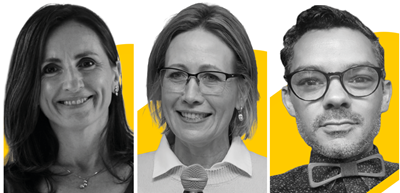
From left, Doina Naude, Janet Barry and Gino Fransman
Doina Naude, Clinical Training Coordinator in the Pharmacy Department, Pharmacy lecturer Janet Barry and Gino Fransman, Academic Developer in LT Collab, will represent Mandela University at OEGlobal (Open Education) 2026.
Here they will share their work on a multilingual pharmacology glossary designed to make specialised knowledge more accessible to students.
The international conference, taking place from 7 to 9 October at MIT in Cambridge, Massachusetts, brings together educators and innovators from around the world to explore new approaches to making education more open, inclusive and collaborative.
For the Mandela University team, the story begins much closer to home — with students navigating the demanding language of pharmacology.
“Pharmacology is full of terminology that can be difficult to understand, even before language becomes an additional challenge. For students whose home language is not English, learning science can mean simultaneously learning the language in which the science is expressed,” the team says.
The glossary responds by combining accessible explanations with multilingual translations. Academic staff, postgraduate students and language experts have contributed to its development, whereas students have played an active role in identifying needs, exploring terminology, researching resources and shaping the glossary.
In doing so, students have become co-creators of knowledge rather than simply consumers of it.
This collaborative approach was strengthened by the team’s experience with Together, an open picture-book project that brought people from different countries and disciplines together to create, translate, remix and reimagine an educational resource, a UNESCO and OEGlobal award-winning project.
The experience highlighted an important principle: openness is not only about making resources freely available. It is also about opening the process of knowledge creation to more people, languages and perspectives.
That idea is particularly relevant to Mandela University, whose language policy recognises the importance of multilingualism, including the development and promotion of isiXhosa and the use of students’ linguistic resources to support access to knowledge.
At OEGlobal, the team will bring this distinctly South African experience into a global conversation about Open Education.
But perhaps the most important message is also the simplest: a glossary may begin with words, but what it can create is belonging.
By opening up the language of pharmacology, the project invites higher education to imagine learning environments where students do not have to leave their languages at the classroom door to participate fully in knowledge.
The glossary development was funded by the Department of Higher Education and Training (DHET) through the University Capacity Development Programme (UCDP) and supported by the University’s LT Collab: Learning and Teaching Development.
The development of the glossary was funded by the Department of Higher Education and Training (DHET) through the University Capacity Development Programme (UCDP) and supported by the University’s LT Collab: Learning and Teaching Development.