He was the keynote speaker at a Conference on Migration and Economic Liberation in Africa, held recently at Nelson Mandela University.
Prof Mohale referenced Russian novelist Fyodor Dostoevsky, to describe what the world is experiencing: there are four wars globally, with war in the Ukraine in its fifth year.
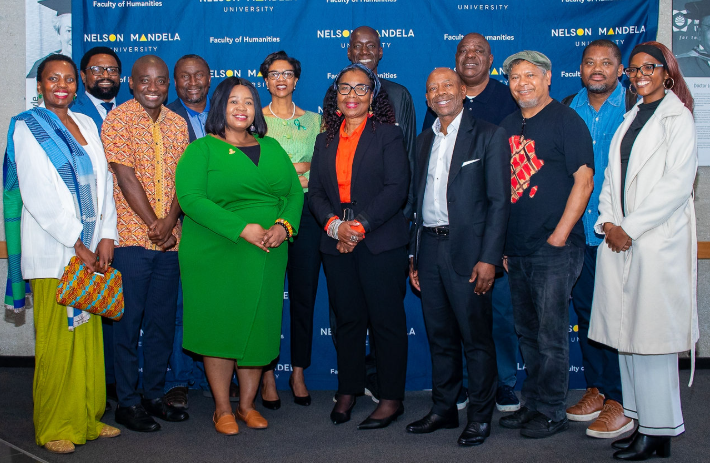
The Conference was hosted by Mandela University’s Centre for Philosophy in Africa (CPA), the African Union Commission’s Centre for the Study and Research on Migration (ACSRM) and the University’s Transdisciplinary Institute for Mandela Studies (TIMS).
The conference comes hot on the heels of nine months of intermittent dissent in parts of the country relating to migrants. Migrants leave their countries due to debt pressures, weak institutions, corruption, conflict and changing global economic conditions, which have affected development in many countries.
Many face exploitation, discrimination and limited access to services including healthcare. In South Africa they face xenophobic attacks.
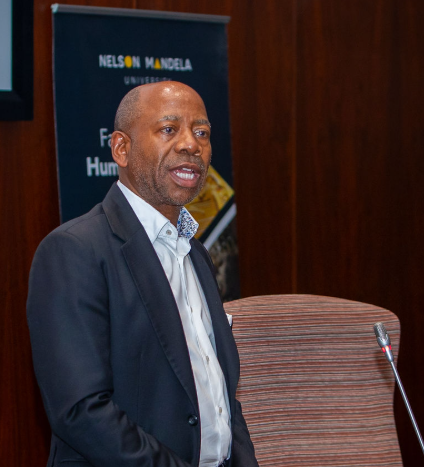 Prof Bonang Mohale
Prof Mohale referred to his grandmother who used to say: Ïf you feel pain, it means you are alive.” To be truly human, one should feel the pain of others and help them. He said when people wake up in the morning to help others, it amounts to “God’s work”.
He said millions of people in Africa cross their countries borders, with hope for a better life, despite several risks.
Referring to the closure of the Strait of Hormuz, due to the war in Iran, Prof Mohale said 20% of global crude oil passes there as well as 30% of global fertilisers and 27 other crucial commodities.
What is specifically important to South Africa, is 70% of South African Airway’s expenditure is on petrol.
“This world is fickle,” Prof Mohale said. The essence of democracy is cause and effect and the cost of liberation is economic. Africa is poorly managed and leadership is a higher form of management.
If South Africa had looked after “our liberation struggle, we would not be in a spot of bother … Liberation is the freedom to say what you believe and how you feel ... and a better life for all, not just elected officials.”
He said Africa has all the minerals the world needs. He referred to the Democratic Republic of Congo, which has a war raging for 30 years, but on paper it is the richest country in the world.
He said in South Africa, 30 million people live below the poverty line, while the government spends more than R250 billion on social grants which are given to 19,2 million people, 30 years after a majority government being in power. “We could use that to lift our own people up with their bootstraps.” Yet they are condemned to a life of dependency.
He questioned why taxi associations do not have a stake in Toyota, yet it is a R90 billion in cash industry. “You think someone is going to advise the South African National Taxi Council to tell the Wessels family (owners of Toyota South Africa) to sell them a 20% stake for the 80% of microbuses they purchase from them, or they will buy Isuzu vehicles to ferry millions of people.”
In response, Prof Nomalinga Mkhize, Acting Director of TIMS, said Africans have a lot of leverage but are using it poorly.
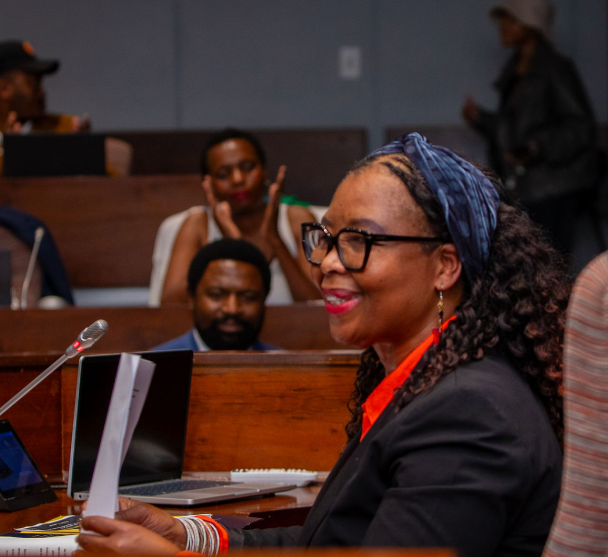 Prof Sibongile Muthwa
In her opening remarks, Mandela University Vice-Chancellor, Prof Sibongile Muthwa said migration is as old as humanity itself.
Today, millions of Africans move within and beyond borders in search of education, employment and a better quality of life, yet shaped by poverty, conflict, climate change and uneven levels of development.
“Migration and economic liberation are intrinsically linked. When properly governed and supported, migration can contribute to economic growth. We should view this as a generative proposition,” she said.
Dr Ibrahima Amadou Dia, Director of the ASCI said where migration is concerned, “most of the narratives are guided by colonial legacies. We want to challenge that narrative.” There was a need to beyond problematising migration.
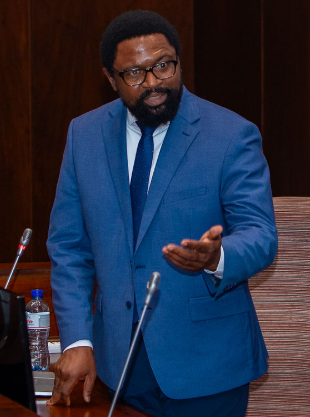 Prof Uchenna Okeja
This was echoed by Prof Uchenna Okeja, Director of the CPA, who said the world over, “when things are going well, we tend to see it (migrants) as a normal phenomenon.
"But sometimes for political, economic, religious and various reasons, migrants are seen as the basis of problems. If you look at them as the basis of problems there will be problems. If you look at them as the basis of opportunities, there will be opportunities.”
Prof Busani Ngcaweni, of the University of Johannesburg Business School, pointed out the precarity of migrants, when a building in George collapsed two year ago and there were challenges identifying their bodies.
He said there are several challenges: “People can move in and out of South Africa without documents.”
Asylum has been used as a status loophole for years. “The government tells migrants to integrate, but withholds the required documents ... It has taken too long to deal with legal and policy loopholes.”
Furthermore, the Department of Home Affairs is porous: some employees abuse migrants. The movement of people to certain cities means that the municipality cannot keep up with the provision of services, leading to clashes with locals.
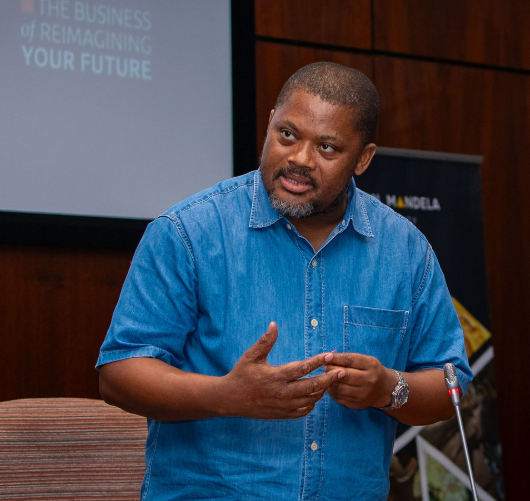 Prof Busani Ngcaweni
Prof Ngcaweni said South Africa needs to learn from Nigeria and Ghana. “No country has been able to expel all migrants. It is not possible to expel all migrants. It’s just not viable.” If they are allowed to stay, they have conditions such as access to services.
For former Gauteng premier, Mbhazima Shilowa, “political freedom, economic opportunity and human dignity are inseparable … The distance between political aspirations and the practical business of improving people’s lives can be considerable.”
When Africa’s liberation movements fought for political independence, “they were fighting for the right of African people to determine their own destiny. They imagined societies in which political freedom would create the conditions for economic opportunity, social justice and human dignity.”
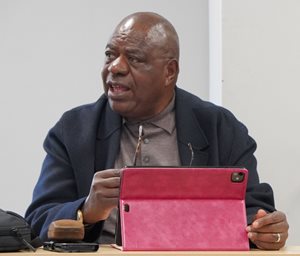 Mbhazima Shilowa
They wanted an Africa in which its people would be free not only from foreign domination but also from poverty, exploitation and the indignity of being unable to provide for their families, he said.
Shilowa said: If political liberation was intended to give Africans control over their destiny, why do so many still believe that their economic destiny lies beyond the borders of their countries?
Human beings have always moved, and they will continue to do so. “My concern is with the circumstances under which people move, the choices available to them and the responsibilities of governments to create conditions in which those choices are meaningful.”
For him, economic liberation must encompass both the freedom to move and the freedom to stay. “The two should reinforce one another. But they should remind us that individual economic success and collective economic transformation are not the same thing. The challenge is to ensure that they reinforce one another.”
Shilowa added, “Migration should contribute to development rather than become a substitute for it.”